
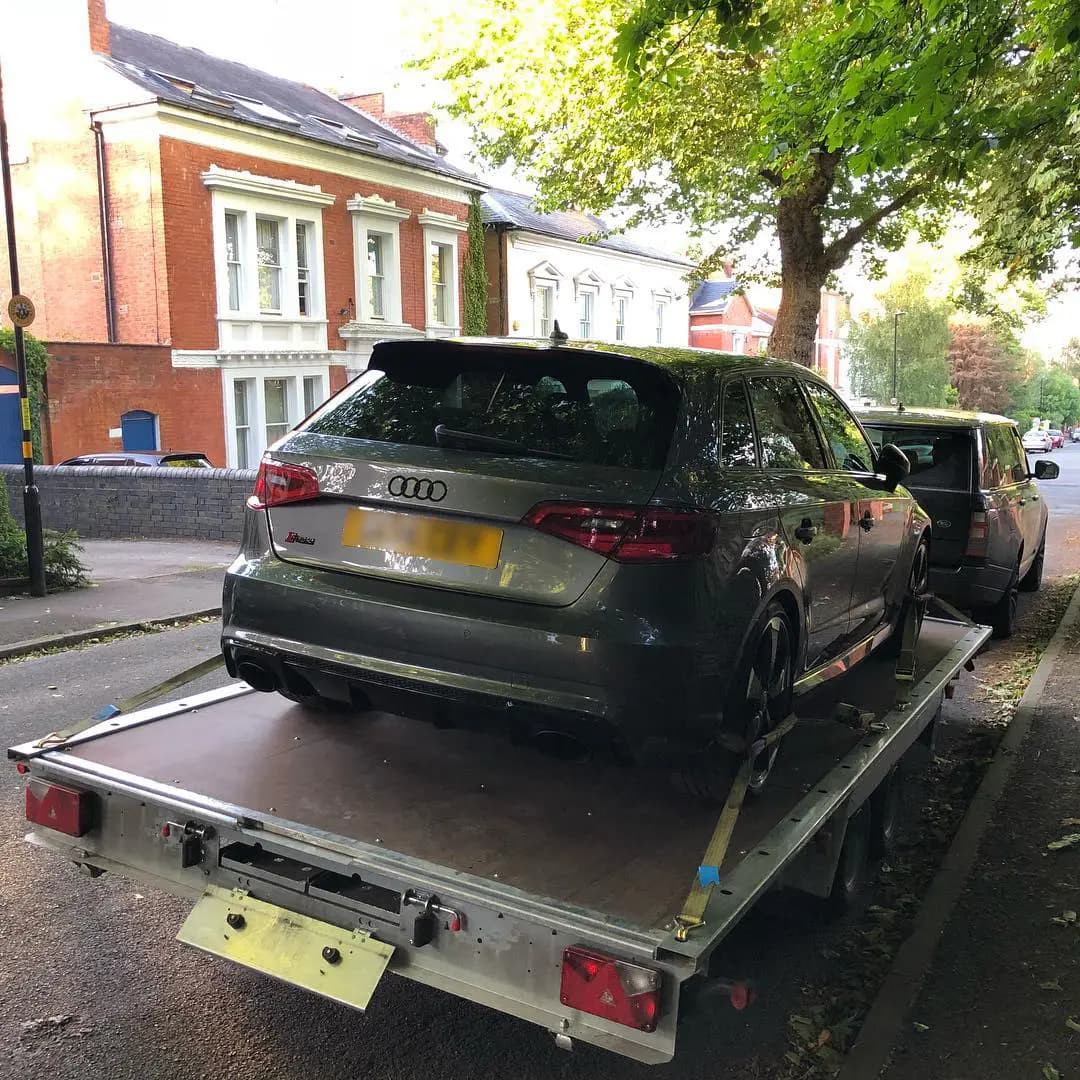
Pebble Beach is the headline event of Monterey Car Week and the most documented concours in the world. For a UK-resident owner with an invitation to display on the 18th fairway, the logistics work begins six months out. Not because shipping a car from Felixstowe to Long Beach is technically difficult — it is not — but because the August calendar is unforgiving and the US import paperwork rewards owners who do it once, properly, and well in advance.
The 25-year rule, in plain English
The single regulatory provision that makes UK classic car import to the United States workable is 49 CFR Section 591.5(f) — the exemption to the Federal Motor Vehicle Safety Standards for vehicles 25 years old or older. The National Highway Traffic Safety Administration treats a car past the 25-year threshold as historic, exempt from the requirement to comply with current FMVSS, and clear for permanent import without modification. The clock runs on date of manufacture, not date of first registration.
The Environmental Protection Agency runs a separate clock under 40 CFR Part 85 — vehicles 21 years old or older are exempt from US emissions standards. That means any car built in or before 2005 is past the EPA threshold today; any car built in or before 2001 is past both clocks. The 25-year line is the cleaner planning threshold because it removes both barriers at once. A 1972 Aston Martin DBS, a 1985 Porsche 911 Carrera, a 1995 Ferrari F355, a 1999 Bentley Arnage — all of them past both lines, all of them straightforward to import to the United States in 2026.
Anything built before the year 2001 is past both the FMVSS 25-year line and the EPA 21-year line. That is the cleanest planning rule.
The paperwork at the US border
The CBP entry package for a UK classic landing at Long Beach contains, at minimum: the original UK V5C registration certificate, the original bill of sale or proof of ownership, the commercial invoice, the bill of lading from the carrier, HS-7 (declaration to NHTSA confirming the 25-year exemption), and EPA Form 3520-1 (declaration to the EPA confirming the emissions exemption). Duty at 2.5% of declared value is paid by the importer of record at entry, and the Harbor Maintenance Fee plus Merchandise Processing Fee are added on top.
We file the import package as part of the bespoke quote — our US customs broker partners hold the importer-of-record arrangements, and the owner receives the cleared release paperwork before the container is collected from the port. Filing the HS-7 with the correct year of manufacture is the single most common cause of clearance delays we see on competitor-shipped consignments. Filed correctly, the clearance is fast — clearance to release at Long Beach for a clean 25-year package routinely runs inside 48 hours.
Long Beach versus Charleston versus New York
For Pebble Beach in particular, Long Beach is the only sensible arrival port. The container vessel from Southampton or Felixstowe to Long Beach sails via the Panama Canal in 21–35 days. The car clears CBP at Long Beach, exits on a US enclosed transporter and runs up Highway 1 to Carmel — a 330-mile, one-day move. Arriving anywhere else on the West Coast (Oakland, Seattle) adds time without adding much value; arriving on the East Coast and trucking across the continent adds 2,800 miles, three to four days on a US transporter and a cost line that the freight saving on the shorter Atlantic crossing does not recover.
For Amelia Island Concours in March, the auction house Miami in January, or any other Florida and Atlantic-coast events, Charleston is the natural port. Felixstowe to Charleston runs 14–18 days on a published schedule, and the onward drive into Florida or Georgia is short. New York is the third option, used most often for owners with destinations in the North-East — Hampton Concours, Greenwich Concours, Lime Rock. Choose port by destination, every time.
The August calendar, working backwards
The Concours d'Elegance is held on the third Sunday of August every year, on the 18th fairway of Pebble Beach Golf Links. Cars on display arrive at the venue by Saturday afternoon for the dawn placement on Sunday. Bonhams' Quail Lodge sale runs Friday; RM Sotheby's Monterey sale runs Friday and Saturday evenings; Gooding & Company's Pebble Beach Auctions occupy Friday and Saturday. The Tour d'Elegance runs the Thursday. That fixes the back end of the schedule.
Working backwards: the car needs to be at the Inn at Spanish Bay or another nominated preparation venue from the Monday before, allowing the full week for detailing, mechanical check and judge-prep. That puts the Long Beach arrival window in the first half of August. Working back from there: a container sailing from Felixstowe in late June or very early July lands at Long Beach by 10 August, allowing five days for CBP clearance and the run up the coast. UK collection — door-to-door enclosed from the owner's garage to the Felixstowe yard — needs to happen by mid-June. The container booking itself needs to be made by mid-May, before the Q3 vessel space fills.
Why owners under-book this calendar
The most common reason a Pebble Beach entrant misses the comfortable booking window is that the invitation arrives late, or the decision to display is made after a winter of restoration work has finished. By that point the mid-May container slots have gone, the alternative is air-freight (workable, materially more expensive) or a rushed late-June sailing on whichever vessel has space. We have shipped cars to Pebble Beach on every one of those paths. The first is the cleanest.
For owners with a serious chance of class-winning at Pebble — Pre-war Bentley, Ferrari pre-1965, Mercedes pre-war and immediate post-war classes — the cost of arriving late and pre-show preparation being compressed is measured in placement, not in shipping line items. The discipline of booking by mid-May rewards itself.
The auction route — the Monterey sales, Gooding
Monterey Car Week is also the largest single collector-car auction week in the global calendar. Bonhams runs the Quail Lodge sale on the Friday — the long-form catalogue with Ferrari 250 GTOs, Mercedes 300SLs and pre-war Bugattis as headline lots. RM Sotheby's runs the Monterey sale across Friday and Saturday evenings at the Monterey Conference Center, a two-night event with the headline lots reserved for Saturday. Gooding & Company runs the Pebble Beach Auctions on Friday and Saturday from the Pebble Beach Equestrian Center. Across the three houses, total sales volume in a strong Monterey week runs into hundreds of millions of dollars.
For UK consignors sending cars to a Monterey auction, the shipping calendar is essentially the same as for a Concours entry, with one practical difference at the buyer end. The vehicle clears CBP into the consignor's name on entry, then re-titles to the buyer after the hammer falls. The auction house handles the re-titling; the original shipper is normally retained to ship the car onwards from Carmel to the buyer's address. Cars that sell to a European buyer travel back across the Atlantic on the September return sailing. Cars that sell to a US buyer move on a US enclosed transporter to their new home, typically in the week after the auction.
Container, RoRo and the rare case for air-freight
Three modes of transatlantic transport, each with a defined use-case. The default for a concours-bound classic is enclosed container — the car is secured inside a 20-foot or 40-foot steel container, the container is sealed at the UK port, loaded onto the vessel and not opened again until the US point of entry. Two cars typically share a 40-foot container where the routing aligns; valuable single-vehicle cars travel solo. Container is the right answer for anything worth more than around £60,000 or for any car where condition matters at arrival.
Roll-on roll-off (RoRo) is the cheaper option — the car is driven on at the UK port, secured to the deck of a dedicated vehicle carrier, and driven off at the US port. The exposure to weather and salt is greater, there is no privacy, and high-value classics rarely travel this way. RoRo has its place for runners that are not concours-pristine and for sale-ready stock moving in volume. For a Pebble Beach Concours entry it is the wrong mode.
Air-freight is the answer when the calendar has slipped beyond the container window. A vehicle loaded into the belly of a 747 freighter at Heathrow or East Midlands arrives in Los Angeles inside 24 hours of departure. The cost runs four to six times the container figure, and the case for it is timing, not preference. For last-minute entries to Pebble Beach, owners do occasionally take the air-freight route. We have shipped cars by air for clients in this position and the paperwork on the US side is identical — same HS-7, same EPA 3520-1, same 2.5% duty.
The return leg and the temporary import alternative
Most owners shipping to Pebble Beach permanently import the car into the United States, paying the 2.5% duty at entry and accepting that the vehicle becomes US-registered if it stays beyond the short visit. A growing minority — owners with a UK collection they want to keep UK-titled — use the temporary import route, in which the vehicle enters on a carnet, attends the event, and exits within twelve months without permanent import. Carnet-based temporary import to the United States is more administratively heavy than the equivalent EU regime and is not always the right answer. We brief at quote stage on which route fits the owner's intention for the car.
The return leg from Long Beach to Felixstowe runs on the same vessel cadence as the outbound. Most concours cars return on the September sailing, landing back in the UK in early October with the car already on the way to winter storage. The full round trip from UK collection to UK return is around fourteen weeks for the August calendar.
For route detail, see our pages on UK-to-USA car shipping, US customs clearance and classic car transport.