
Collection from period garages and long-term storage
Most classic collections begin at a private address: a period garage with a low door, a Cotswold barn, a long-term storage facility, an estate property where the car has not moved for a season, or the workshop of a marque specialist. Many of the cars do not run on the day of collection. Many sit on tyres that should not be driven at speed. Many have a handbrake that no longer holds against a slope. The transporter and the driver are specified accordingly: a low-loading enclosed trailer with extended shallow ramps, a soft-sling winch, wheel chocks for a non-running load and the time to do the work properly. The collection window is generous by design; the driver does not arrive on the clock.
Before loading, the driver completes a documented inspection. Period electrics are noted, fluid traces under the car are recorded, tyre condition and age are checked and fuel level is logged. Older fuel that has sat in the tank for a season can gum carburettors and risk a dead engine on first crank, so the driver will not attempt to start a car against the owner’s instruction. Where the battery is flat, an external jump pack is used in preference to a tow-start that would load the drivetrain. Where the car will not move under its own steam, it is winched gently with a sling that bears on the wheels rather than the suspension or chassis members.
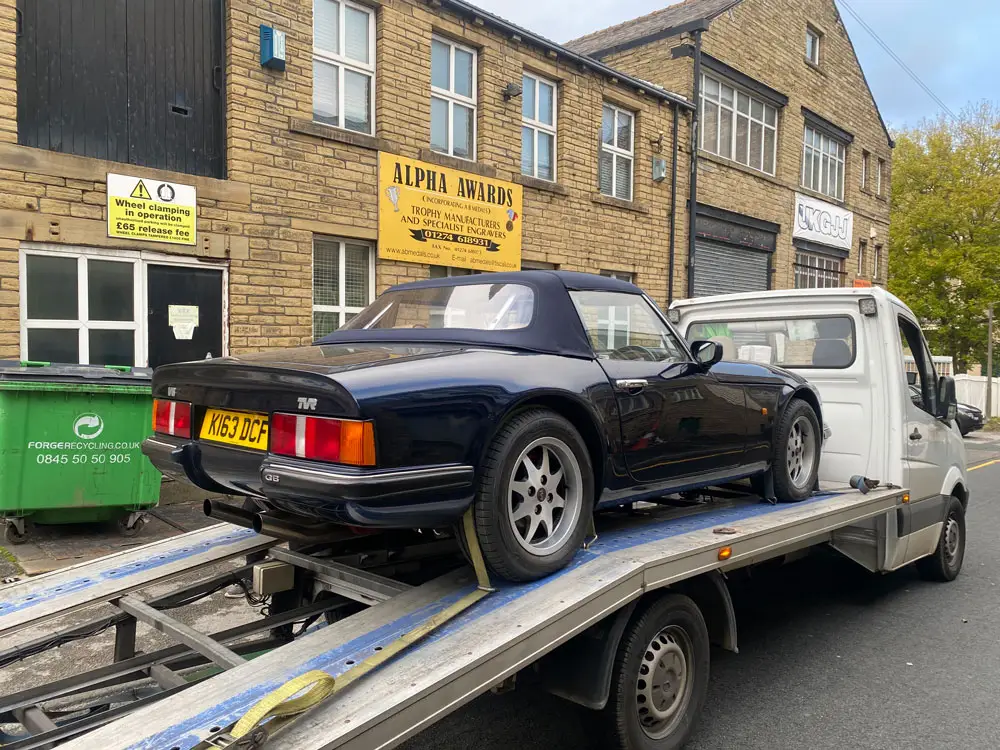
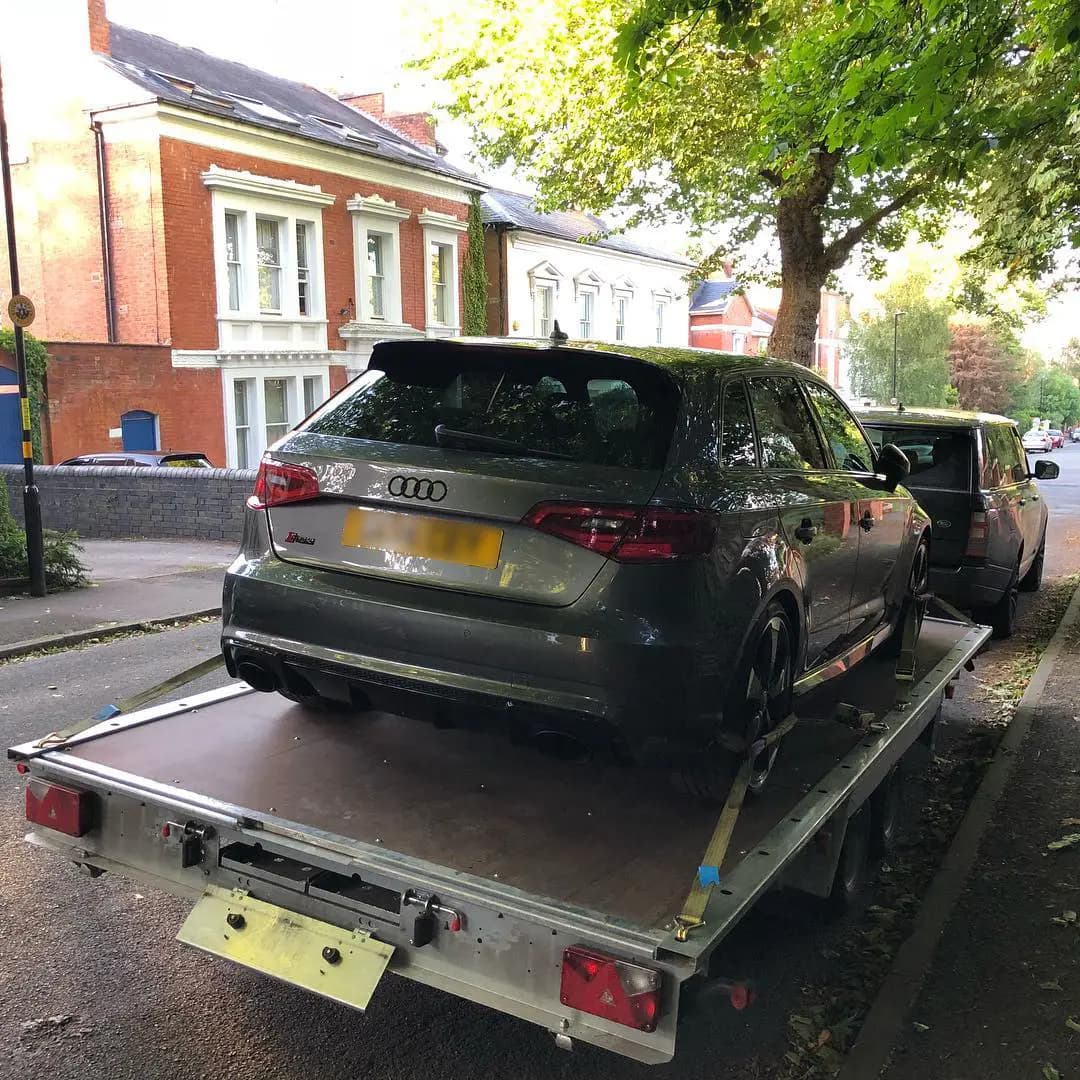
Soft-strap loading, climate management and transit
Loading uses soft webbing straps placed over the wheels. Never chains over the axle. Never tie-downs that load the chassis through a brittle bracket or a sixty-year-old bumper iron. A pre-war chassis is not a modern monocoque, so it is loaded as a pre-war chassis. The car is the only vehicle on the deck for the duration of the run. The trailer is sealed and alarmed. The climate system holds a stable interior environment for the full journey. On a Channel crossing the car remains on the same transporter through the Tunnel or the deck, with no port-side reshuffling and no sea-air-exposed open carriage.
Overnight stops are taken at a secure fenced-yard site, not a roadside service area. On longer runs into Italy, Switzerland or southern Spain, the timing is planned around the car’s tolerance for transit (most vintage interiors and electrics react badly to sustained temperature swings) and climate control runs continuously. Our enclosed transport service is the standing protocol for any classic, regardless of value.
Delivery to concours field, auction venue or workshop
Hand-over takes place at the address of your choice: a concours field at Pebble Beach or Hampton Court, the start paddock at Brescia for the Mille Miglia, an auction venue at Goodwood or Monte-Carlo, a restoration workshop at Maranello or Stuttgart, a summer residence on the Côte d’Azur, a family garage on return from a season abroad. The driver completes a hand-over inspection mirroring the collection record, hands over the cleared customs release on international shipments, and emails the full documentation pack the same day. A client is never asked to collect a classic from a port or a marshalling yard.