Routing from the UK to the Versilia coast
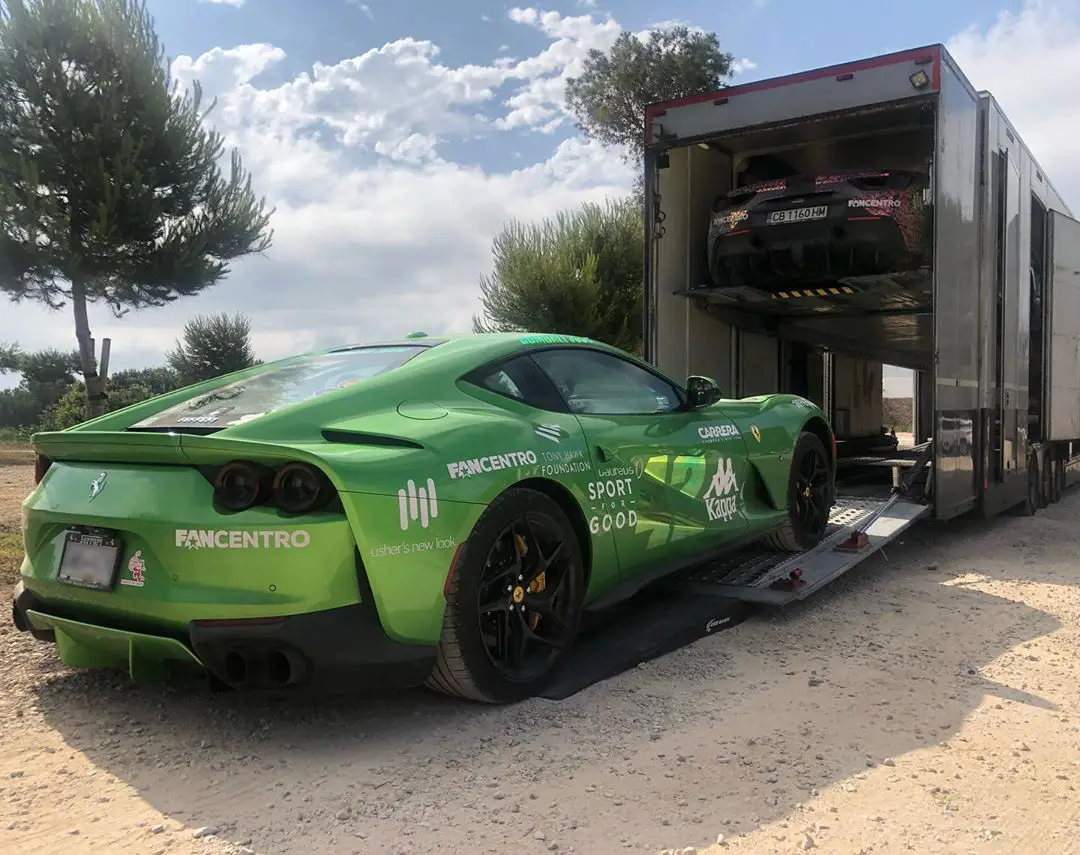
Every Forte dei Marmi shipment begins with a collection from a mainland UK address you nominate — most commonly a private garage, a family residence or a specialist storage facility. The transporter arrives within a pre-agreed window, and before the car is loaded for the run south to the Versilia coast the driver completes a pre-shipment inspection: every panel photographed, the fuel level and mileage recorded, and the documentation walked through with you.
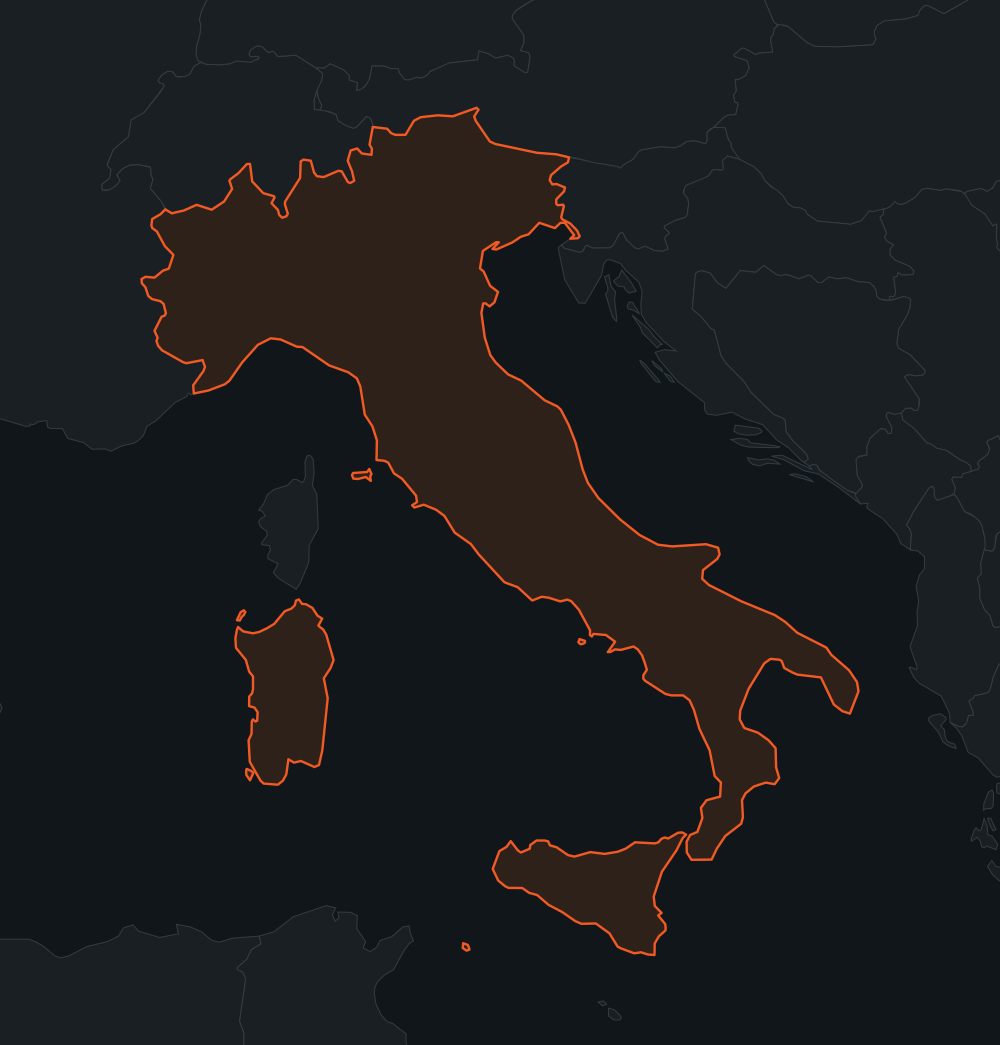
From there, the car crosses into Europe in a single-vehicle enclosed transporter with air-ride suspension: the standard routing runs Eurotunnel from Folkestone, then south through France via Reims and Lyon — or through Switzerland via the Gotthard for the early summer routing — joining the A12 down the Italian west coast through Genoa, La Spezia and into the Versilia. Calais to Forte is around 18 to 20 hours on the road and most shipments complete inside four to five working days. The sea routing from Southampton or Felixstowe to Livorno covers the trunk leg in around five days, with a short onward enclosed haul north along the coast, and suits multi-vehicle consignments and household-with-car moves.
The Livorno quay, the customs clearance and the trunk transit stay our responsibility; the car arrives on the Versilia cleared and ready to deliver to the gate.
Villa delivery — Roma Imperiale, the bagni cluster, the inland Versilia
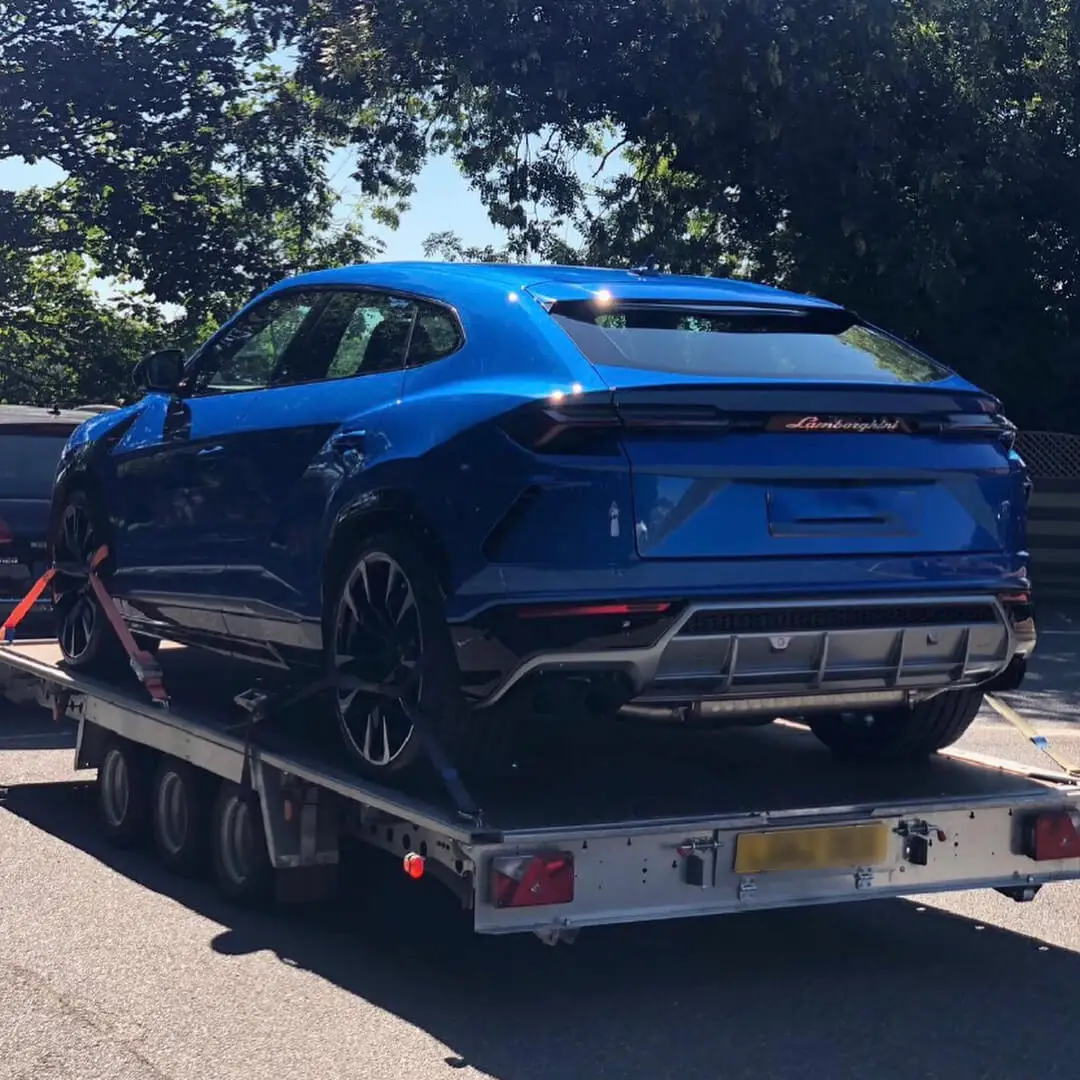
Forte dei Marmi splits into clusters and our drivers know each cluster’s access pattern. The Roma Imperiale residential grid in the centre of the town is laid out wide enough to deliver direct to most villa addresses, and is the core of our Forte dei Marmi volume. The bagni-front cluster along Viale Italico — running south past Twiga and north past La Capannina di Franceschi — has pedestrian-zone restrictions during August evenings and a permit regime around the Pontile, with hand-over staged at a permitted nearby drop-off and the final approach by a driver.
The hotel set — Augustus, Principe Forte dei Marmi, Byron, Grand Hotel Imperiale — receives cars at the forecourt or front entrance, with the arrival window co-ordinated with the concierge desk before the transporter leaves the UK. The inland Versilia, running back from Forte to Pietrasanta and up into the Apuan hills, is delivered direct to the villa gate. The wider Versilia coast — Marina di Pietrasanta, Lido di Camaiore, Viareggio — runs lighter in summer volume but is reached on the same routing.
The August migration, customs and the September return
Forte dei Marmi’s August is the densest movement on the Italian coast. The wider Tuscan and Versilia season fills in a defined three-week window from late July through the Ferragosto holiday in mid-August, with a sharp tail-off in the first week of September. Italian families from Milan and Turin migrate alongside the UK, German and Russian clientele, and the local transporter network books out weeks ahead. We sequence multiple shipments per client where they run more than one car on the coast, and lock in the September return run at the same time as the outbound — the late-August queue back from Forte to the Versilia depot is the tightest squeeze of the year.
Our Italian broker lodges the import declaration on arrival and handles UK-origin imports weekly, so the paperwork is off your desk from the moment the transporter reaches Livorno. An August in Forte or a Ferragosto fortnight needs no Italian VAT or duty under temporary admission, provided the car leaves by its agreed exit date; a permanent move to Italian plates is a different process, covered in full in our European customs guide.
At hand-over, whether that’s a Roma Imperiale villa gate, a hotel forecourt on the bagni front, or an inland Versilia address, you receive the cleared customs release, the bill of lading and the pre-shipment inspection record, checked against a final inspection on the day. The whole pack is also emailed.