
Skip to content

UK to USA car customs: duty, EPA, DOT and the 25-year exemption

Get a free quote

Shipping a car from the United Kingdom to the United States is a materially harder customs problem than UK to Europe. The US is a third country with its own paperwork at both ends. EPA and DOT compliance sits above most UK road cars. And a single carve-out, the 25-year rule, accounts for most of the transatlantic classic and supercar trade ICM books each year. This page covers the ground we cover with every client before taking a US-bound booking.

See our UK to USA shipping page for the wider service, or European customs for the equivalent EU walkthrough.

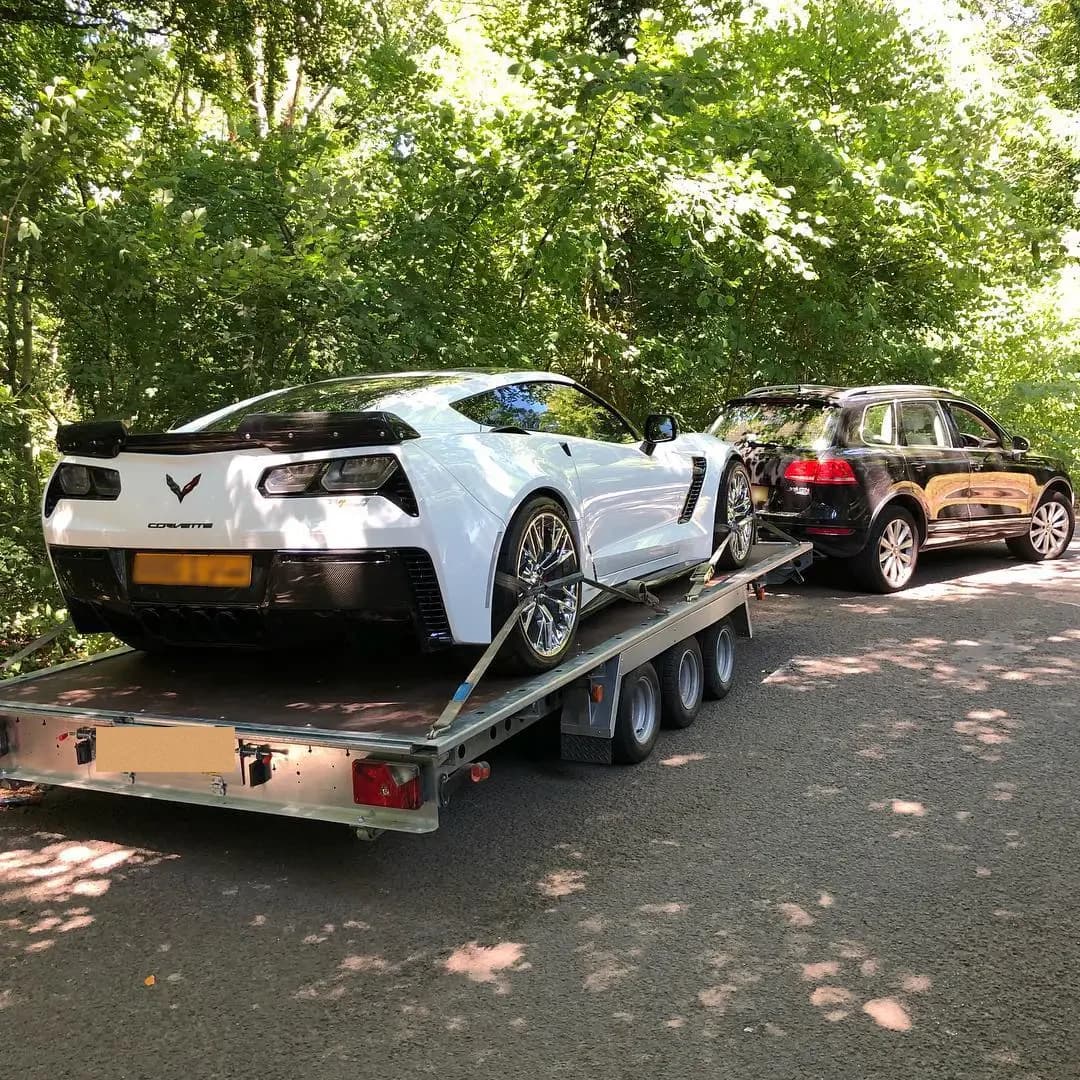
A white Corvette on the deck of an ICM multi-car transporter

US customs at a glance

Import duty
2.5%
passenger cars (10% motorcycles, 25% light trucks)
EPA + DOT
Required under 25 years
with limited exemptions (Show or Display, RI, B-1/B-2)
25-year exemption
EPA + DOT exempt
vehicles 25 years old or older from date of manufacture
ACE System access
Direct CBP filing
DVLA, ISF, AES, HS-7, EPA 3520-1, CBP 7501

Why UK to USA customs is different

Every UK to EU customs job (France, Spain, Italy, Germany) shares the same shape. A single customs union sits at the European end, the vehicle moves by road and Eurotunnel, and the duty position is well-trodden. UK to USA is a different problem in almost every dimension. Treating it as a long-distance version of the European route is the most common reason a US-bound shipment runs into trouble.

It is sea freight, not road. Every UK to USA shipment sails. Container vessels out of Liverpool, Southampton or Felixstowe run to New York, Baltimore, Charleston and Miami on the East Coast, and via the Panama Canal or East Coast trans-shipment to Los Angeles, Long Beach and San Francisco on the West. Sea transit alone is typically two to three weeks. With port handling, customs clearance and onward US delivery, the door-to-door window is four to six weeks for the East Coast and six to eight for the West.

The US is a third country. There is no shared customs union, so each leg requires a complete UK export pack and a complete US import pack rather than a single Union transit document. On the UK side that is a DVLA permanent export marker against the V5C and an AES filing before sailing. On the US side it is the ISF (Importer Security Filing) before the vessel departs, the formal CBP entry on arrival via Form 7501, and the EPA and DOT declarations alongside.

The DVLA marker is permanent. A UK car shipped to Europe under a temporary admission carnet keeps its UK registration intact. A UK car shipped to the United States is permanently exported. DVLA stamps the V5C, the UK record is closed, and the vehicle is intended to be titled and registered in its destination US state. The V5C is returned to you as proof of UK history, which US title agents and state insurers routinely ask to see.

The duty is 2.5%, with sharp edges. Passenger cars attract 2.5% of the declared customs value at the US border. Motorcycles are 10%. Light commercial trucks are 25%, the so-called Chicken Tax (a 1960s tariff that still catches owners of UK-registered pickups and panel vans). The value used is a contemporaneous open-market valuation or a recent bill of sale, supported by photographs and any history file.

EPA and DOT compliance is the wall. US Environmental Protection Agency emissions standards and US Department of Transportation safety standards are not the same as European Whole Vehicle Type Approval. Most UK road cars do not natively meet them. Lighting, bumper heights, airbag deployment thresholds, on-board diagnostics and emissions hardware all diverge. A UK-spec McLaren or Ferrari driving off a UK forecourt is not, by default, an EPA/DOT-compliant US road car, and registering it as one without modification is unlawful.

The 25-year exemption is the workaround. Section 591.5 of the Federal Motor Vehicle Safety Standards exempts any vehicle 25 years old or older from both EPA and DOT. This single carve-out is why most UK to USA shipments we book are classics taking the 25-year route, and why the year a particular model crosses its 25th birthday is the year US private-collector demand for it tends to spike.
The 25-year exemption, explained

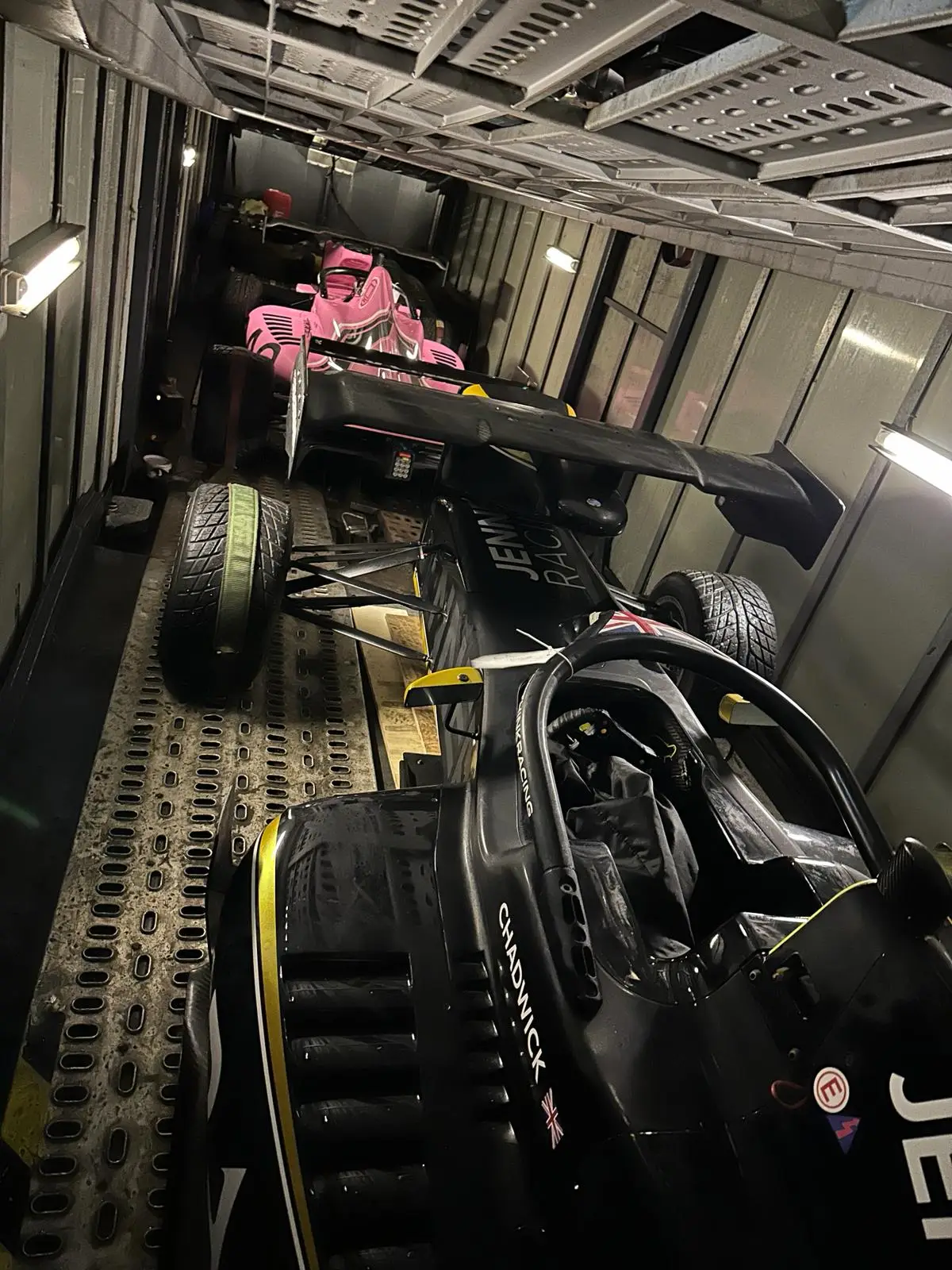
A single-seat racing car strapped down on the upper deck of an ICM enclosed transporter, with a second car below

The 25-year rule sits in Section 591.5 of the US Federal Motor Vehicle Safety Standards. Any vehicle 25 years old or older, measured from its date of manufacture, is exempt from EPA emissions and DOT safety compliance for the purpose of US importation. There is no application process, no fee and no engineering review. The exemption is claimed at the border by ticking the relevant box on the HS-7 form (DOT) and the EPA Form 3520-1 (EPA), supported by evidence of date of manufacture.

The age test runs from date of manufacture, not date of first registration. A car built in late 1999 but first registered in early 2000 was exempt from 2024, not from 2025. The chassis plate, the VIN decode or a build-record letter from the manufacturer all establish the date. Where the model year on the VIN differs from the calendar year of manufacture (common with cars built in the final quarter) ICM works to the manufacture date stamped on the plate, which is what CBP and DOT will accept.

The practical effect is a rolling annual unlock. As of 2025, any car built in 2000 or earlier qualifies. From 2026, any car built in 2001 or earlier qualifies. The late-1990s and early-2000s UK supercar back catalogue is now firmly in the US private-collector window: McLaren F1, Bugatti EB110, Jaguar XJ220, the early Aston Martin Vanquish, the first-generation Ferrari 360. ICM has shipped each of these on the 25-year route in the past two years.

A 25-year wait pattern has settled into the US classic and supercar market. Collectors identify a target car eight to ten years out, pay for European storage or a UK-side caretaker programme, and land the vehicle the year it crosses 25. Where a car is between 21 and 24 years old, US bonded storage at the port of arrival is an option. Duty and EPA/DOT exposure are deferred, and the vehicle sits in CBP-bonded space until the clock runs out. ICM coordinates the broker relationship for clients running that strategy through our ACE filing access.

One caveat: the 25-year exemption removes EPA and DOT compliance, but it does not waive the 2.5% passenger-car import duty. A 1965 Aston Martin DB5 still attracts the 2.5% on declared value at the US border.

What ICM handles, end to end

Every UK to USA booking includes the full customs chain at both ends. The Customs Brokerage team carries the entry through CBP via direct ACE System access, so you are not chasing a clearance reference at the port of arrival.

What you need to provide

A short list. ICM does the rest. Most of the heavy lifting sits at our end, lodged through the ACE System and the relevant federal agency channels.

A white Corvette on the deck of an ICM multi-car transporter
  • V5C — original, returned to you with the permanent export marker applied
  • Proof of ownership or a contemporaneous purchase invoice
  • Photo ID (passport preferred, driving licence accepted)
  • Insurance details for the transit leg
  • Final US destination address (state matters for onward registration)
  • US importer of record details — yourself, or your US-based contact

Specialist or low-volume marques may require a chassis-plate photograph or a manufacturer letter to evidence date of manufacture for a 25-year exemption claim — we will let you know on the booking call where this applies.

When the 25-year exemption does not apply

A McLaren 720S, an Aston Martin Valkyrie, a current-shape Ferrari SF90 or a recent Bentley Continental sits well inside the 25-year window, so the headline exemption is not available. Three routes remain, each with its own constraints.

Show or Display. A narrow exemption granted by NHTSA for vehicles of documented historical or technological significance, limited to fewer than 500 units produced in any given model year and capped at 2,500 road miles per year in the US. The McLaren F1 qualifies. The Bugatti Veyron qualifies. The modern volume-production Ferrari and Lamborghini line does not. Show or Display is not a route for a daily-driver supercar.

Registered-importer conversion. A US-side Registered Importer modifies the vehicle to meet EPA emissions and DOT safety standards: lighting, bumper heights, airbag deployment, on-board diagnostics, sometimes engine and exhaust work. The bill commonly runs to £30,000 or more, and the modified car is no longer a UK-spec car in any meaningful sense. For a small number of clients with a permanent US move and a particular vehicle, this is the right answer. ICM coordinates the RI bonding side through our ACE-linked broker relationships.

B-1/B-2 temporary import. A non-resident UK owner visiting the US on a B-1 or B-2 visitor visa can bring a foreign-spec vehicle into the country for up to one year without EPA or DOT compliance, on condition that the car leaves at the end of the period. The car cannot be sold or permanently registered. This is the standard route for clients moving a UK-registered car for a single US season (Pebble Beach in August, Amelia Island in March, a Hamptons summer residency) with the vehicle returning to the UK afterwards.

Race Exemption. A separate EPA channel for vehicles intended exclusively for closed-course competition (track days are not closed-course competition for these purposes). The car cannot be road-registered. ICM has filed Race Exemptions for clients moving GT3, Cup and Trofeo cars across to the US event circuit.

ICM will tell you which route fits before collection, and we will not take a permanent-import booking for a vehicle that cannot lawfully be registered in its destination state.

UK to USA customs — your questions

Shipping a car to the USA?

Tell us the vehicle, the year of manufacture and the destination state. A specialist returns with a bespoke quote covering mode, port, transit window, customs handling and the 25-year exemption position, within 24 hours. Or use our transport quotes page to scope the shipment and request a fixed price in pounds sterling.