
Skip to content

UK to Europe car customs

ICM handles the export, transit and import paperwork for your route. This guide explains the documents you need and how we prepare them before collection.

Looking for the equivalent for the United States? See our UK to USA customs page.

Get a free quote

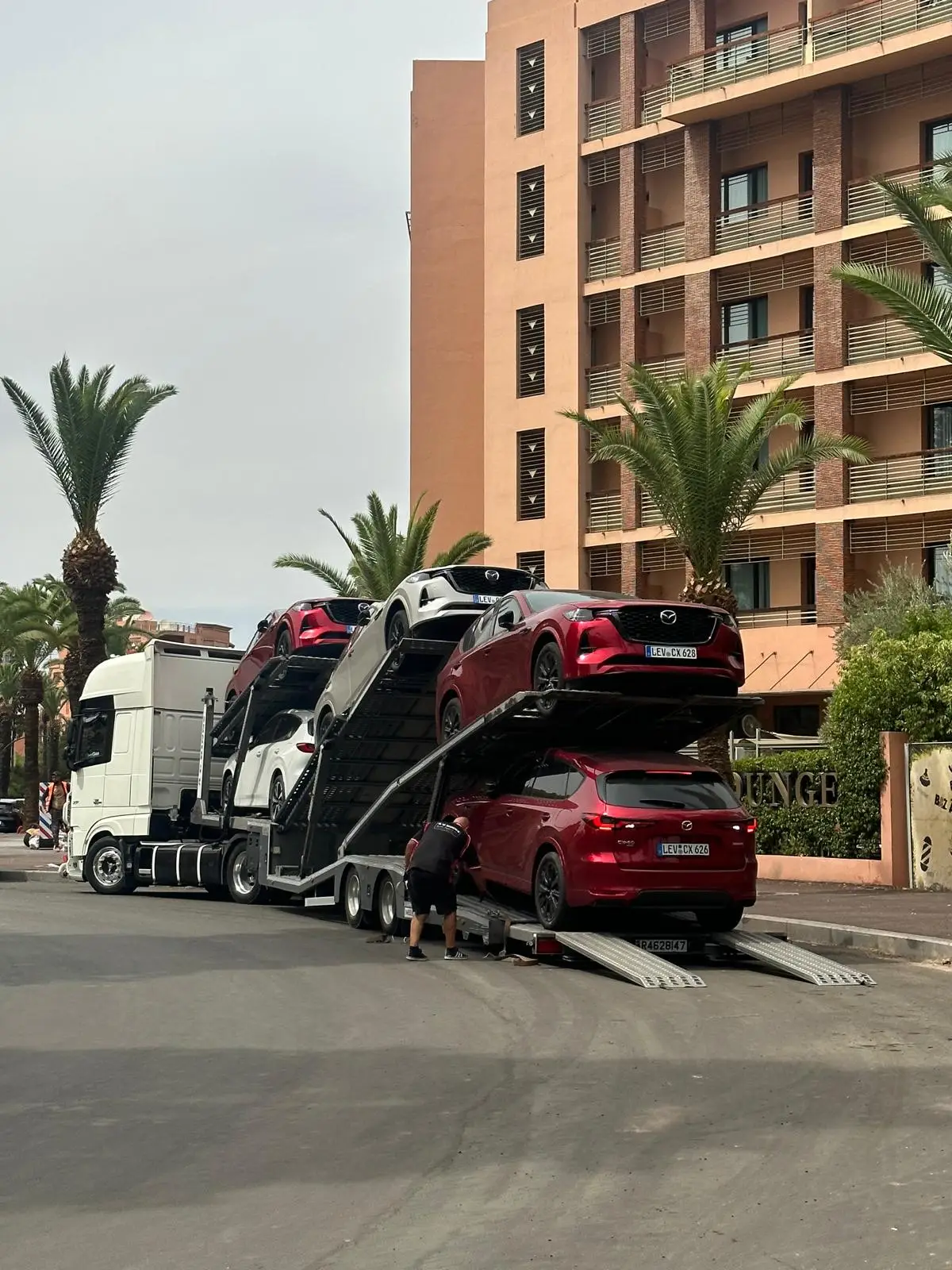
An ICM transporter loaded with cars on a Mediterranean street lined with palm trees

European customs at a glance

Customs declarations
Handled on your behalf
every document, every port
VAT and duty
Calculated and pre-cleared
no surprises at the border
Documentation
ICM prepares and lodges
with customs at both ends
Post-Brexit
All EU border procedures
included as standard

What changed after Brexit, and how we handle it

Before 2021, shipping a car from the UK to France, Spain or Italy was a logistical exercise, not a customs one. The UK was an EU member state, goods moved freely within the single market, and the only paperwork that mattered was the V5C, the bill of lading and the transit insurance. A transporter could load a Range Rover in Surrey on a Monday and unload it in a Mougins driveway on a Thursday without a single customs declaration changing hands.

Since the end of the Brexit transition period on 1 January 2021, the UK has been a third country for customs purposes. Every vehicle crossing from Great Britain into the EU customs union is now a customs entry. That entry has to be raised at the UK port of departure, supported by an EAD (Export Accompanying Document), and matched against an import declaration at the destination customs office. While the vehicle is travelling between the two, whether through the Channel Tunnel, across the short straits, or via the long sea route to Marseille, it is held under a T1 transit document, which keeps it bonded and outside free circulation until it clears at the other end.

What this means for the client is straightforward in principle, and something ICM works through methodically in practice. There is a value to declare. There is a commodity code to apply (8703.x.x.x for passenger cars, with sub-codes by engine type and cylinder capacity). There is a customs procedure code to select, which tells the destination office whether the vehicle is being permanently imported, temporarily admitted, returned after repair, or moved under a relief. There is a VAT and duty position to settle, sometimes nil, sometimes substantial, depending on whether the vehicle is personal-use, recently purchased, company-owned or being permanently imported. There is a residence status to evidence, where the route into the EU uses a temporary-admission or transfer-of-residence relief. And at every step, the destination customs office checks each of these before releasing the vehicle onward.

There is also the question of rules of origin. Under the UK-EU Trade and Cooperation Agreement, vehicles of UK origin meeting the threshold (broadly, sufficient UK or EU content in the bill of materials) qualify for nil EU duty. Vehicles that fail the test, or that cannot be evidenced, attract the standard 10 per cent third-country rate on a passenger car. Where the vehicle was first registered to a UK keeper and remains in UK ownership, origin is generally clean; where the car has changed hands recently, or was originally a personal import from outside the UK or EU, the test needs working through before the export side is lodged.

This is where a coordinated process earns its keep. A booking that skips a proper broker relationship, or splits the port work and the destination clearance across two operators who have never worked together, can leave a vehicle waiting at a customs yard while the missing document is traced and storage charges accrue in the meantime. ICM avoids this by treating the export end and the import end as one job: the same firm raises the EAD, opens the T1, and briefs the destination broker before the vehicle has even left the UK.

ICM's position is that this is exactly what we do, and exactly what the client should not need to learn. We would rather you not know what a T1 looks like. We would rather the conversation be about the address for collection, the date you need the car in the Principality, and the marque on the V5C, not about commodity codes and procedure codes and the difference between an EUR.1 and a statement on origin.
The rules that decide your cost

Two decisions, made before the vehicle leaves the UK, settle almost everything else: whether this is a permanent move or a temporary one, and whether the car qualifies for relief on the way in. Here's what each one covers, and who actually does the filing.

Transfer of Residence relief

If you are relocating to the EU and taking a car you already own with you, Transfer of Residence relief removes the import VAT, and any duty, that would otherwise fall due on that vehicle. Timing is the whole of it: the relief is approved before the car travels, and it cannot be backdated once the vehicle has arrived. Applying as soon as the move date is set is the single biggest saving available on a relocation, and it is the first thing ICM checks once a client tells us they are moving rather than visiting.

Temporary or permanent import: which one applies

A car that is visiting the EU rather than moving there permanently, for a season at a second home or a fixed period abroad, comes in under temporary admission. That comes with a defined date by which the car has to leave again, commonly up to six months in any 12-month period. That date is what keeps the car a visitor rather than an import, so ICM tracks it against your travel plans and flags it well ahead.

The pattern we see most often with second-home owners is a car that lives at the villa for most of the year, comes back to the UK for an MOT or a dealer service, then goes out again. Each leg is its own temporary admission rather than a one-off import, so it is the return date on that particular crossing that matters, not the original one. ICM manages this as a standing arrangement rather than treating every crossing as a fresh case.

Origin and duty under the TCA

Under the UK-EU Trade and Cooperation Agreement, a vehicle of proven UK or EU origin clears EU customs duty-free. The V5C is normally the evidence used to establish that origin. A car that was built elsewhere and simply registered in the UK does not qualify, and is charged the standard 10 per cent third-country rate on its customs value instead. ICM checks origin before the export side is lodged, so the position is settled before the vehicle leaves rather than queried on arrival. For how the commodity code and procedure code themselves are applied, see the FAQ below.

What ICM files, and what you never have to

Whichever of the above applies to your move, you do not file anything with a customs authority yourself, at either end. ICM supplies the destination broker with the V5C, the bill of lading, a commercial invoice or valuation, and whichever residence or visiting documents the relief you are using requires. Whatever the VAT, duty or relief position turns out to be, the broker handling the clearance confirms it in writing before anything is lodged, so the figure is settled before the vehicle is collected, not discovered after it has arrived.

What ICM handles for you

Three stages, every shipment, included as standard. The filing, the port-side waiting and the clearance chase-ups happen on our side of the desk.

Pre-departure

V5C export marker lodged with the DVLA. EAD (Export Accompanying Document) raised and lodged at the UK port of departure. Pre-shipment inspection record completed at collection.

In transit

T1 transit document keeps the vehicle bonded during the crossing and through any third-country territory. No duty falls due until arrival at the declared destination customs office.

Arrival

Import declaration lodged at the destination customs office. VAT and duty calculated, often nil for personal-use vehicles already owned. Customs release issued and the transporter resumes the journey to the door.

At hand-over you receive the full document pack: cleared customs release, T1 close-out, bill of lading, EAD reference, the pre-shipment inspection record and the destination broker's release note. The pack is also emailed for your records and is the documentation you will need for future resale, re-registration or any subsequent customs query.

What we need from you

A short list, and we help assemble it. You do not fill in any customs forms yourself.

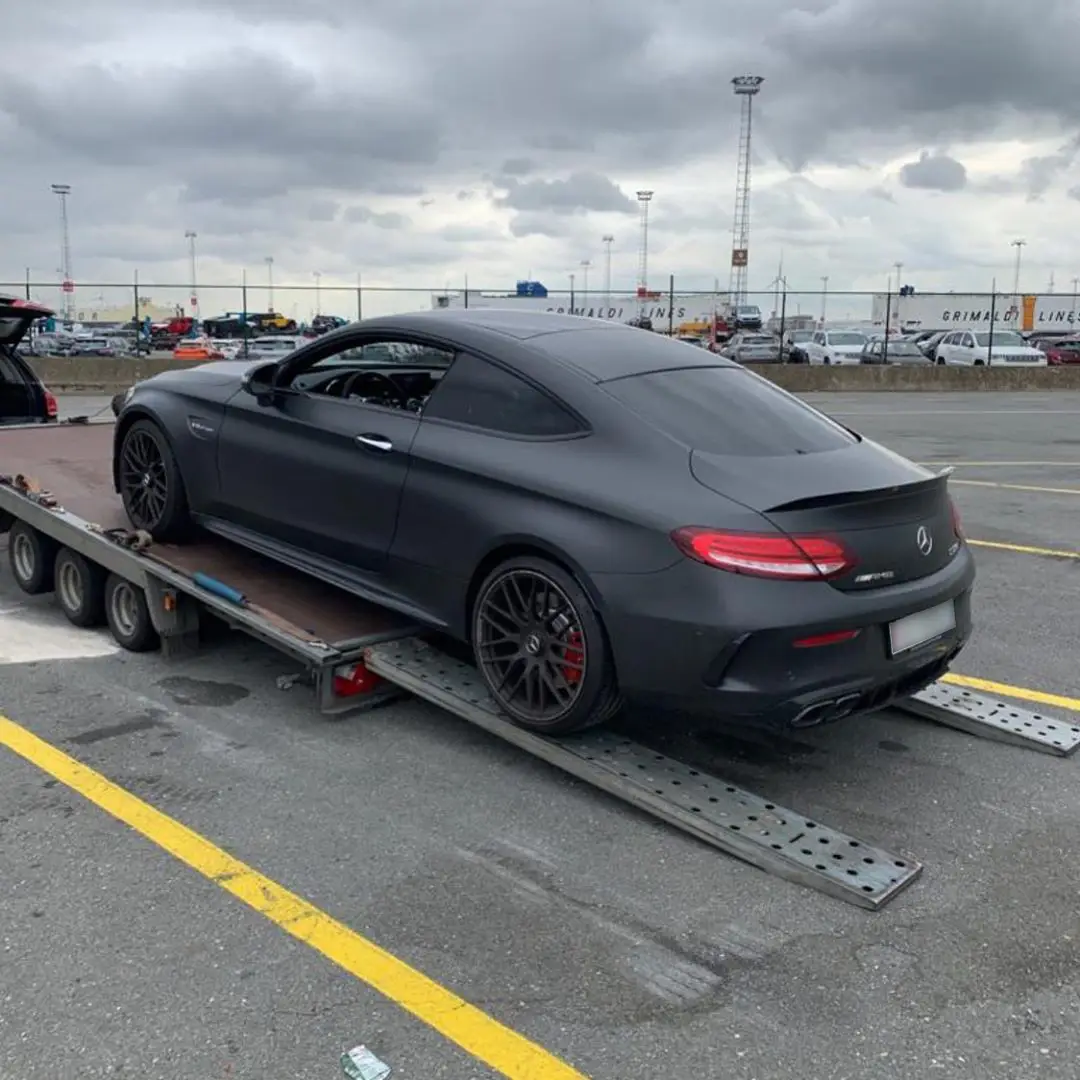
A grey Mercedes coupé on an ICM trailer at a port compound
  • V5C (logbook) — originalThe original UK vehicle registration document. ICM lodges the export marker with the DVLA on your behalf.
  • Photo IDPassport or driving licence for the registered keeper. A scanned copy is acceptable for the declaration; the original travels with the documentation pack.
  • Proof of addressA recent utility bill, council tax bill or bank statement, less than three months old.
  • Proof of ownershipPurchase invoice or bill of sale where the vehicle was bought recently. Establishes value for the customs declaration.
  • Insurance detailsYour policy number and insurer. ICM's transit cover handles the move itself; your annual policy resumes on hand-over at destination.
  • Company documents (if applicable)For company-owned vehicles: certificate of incorporation, VAT registration and a letter of authority from a company officer.

ICM compiles the pack with you over a short call or email exchange before collection. If a document is missing or out of date, we tell you what to obtain and how. We do not let a shipment leave the UK with an incomplete file.

Country-specific notes

Each destination has its own nuances. ICM handles the customs work at both ends regardless; the notes below are for your awareness, not your action.

Specialist handling

Beyond the standard procedure

An ICM transporter loaded with cars on a Mediterranean street lined with palm trees

The standard procedure (EAD, T1, import declaration) covers the majority of vehicles ICM ships. A small but important share of shipments fall outside the standard track, and these are the ones where ICM's specialist network and broker relationships make the most difference.

High-value vehicles (above the limit confirmed on your quote). The declared value drives the VAT exposure, and a vehicle valued in seven figures invites scrutiny from the destination customs office. ICM works with a valuation methodology that stands up to query: auction comparables, marque-specialist statements, and where relevant an independent surveyor's report attached to the declaration.

Vehicles purchased outside the UK. Where the car was bought in, say, Germany or the United States and is being shipped via the UK to a final European destination, the VAT picture shifts. The vehicle may not have been in free circulation in the UK in the first place, which changes the export side. ICM unpicks the origin, applies the correct procedure code, and lodges the declaration in a way that does not double-count VAT.

Pre-1950 classics. Cars of historic interest are commonly exempt from import duty under the EU's classic vehicle relief, with a reduced VAT rate in many member states. The relief is generous, and it rewards a well-assembled file. ICM puts the evidence together (period photographs, marque-specialist certification, an FIVA or HSCC card where available) and lodges the declaration under the correct heading.

Restorations and parts shipped separately. A vehicle moving to a European workshop for restoration, with bodywork or drivetrain components following separately, is typically declared under an inward processing relief that suspends VAT and duty for the duration of the work. ICM co-ordinates the vehicle entry with the subsequent parts consignments so the bonded position is preserved.

Round-trip movements (UK to factory service to UK). A vehicle returning to Modena, Stuttgart or Maranello for factory service moves under either an ATA carnet or a TIR carnet, depending on route and destination. The two carnets serve different purposes. ATA is built for temporary admission of professional or commercial goods between member customs administrations; TIR is built for road transit through multiple countries. ICM advises on which applies, raises the carnet, and closes it out cleanly on the return leg.

Vehicles requiring an export licence. Most modern passenger cars are not licensable, but a small category is: armoured vehicles and vehicles modified for military or security use fall under the UK strategic export controls, and historic vehicles of national cultural significance can fall under the cultural goods regime administered by the Arts Council. ICM screens against the relevant control lists at booking and obtains the licence where one is required, before the shipment is scheduled.

European customs — your questions

Let us handle the customs work

Tell us about the vehicle, the destination country and the date you need it there. A specialist will return with a bespoke quote that includes every customs document and broker fee, normally within 24 hours.

Country pages and tools

The customs treatment varies by destination. For route-specific detail, see the relevant country page. To get the customs work priced alongside the haulage, use the transport quotes page to scope the shipment and request a fixed quote.