
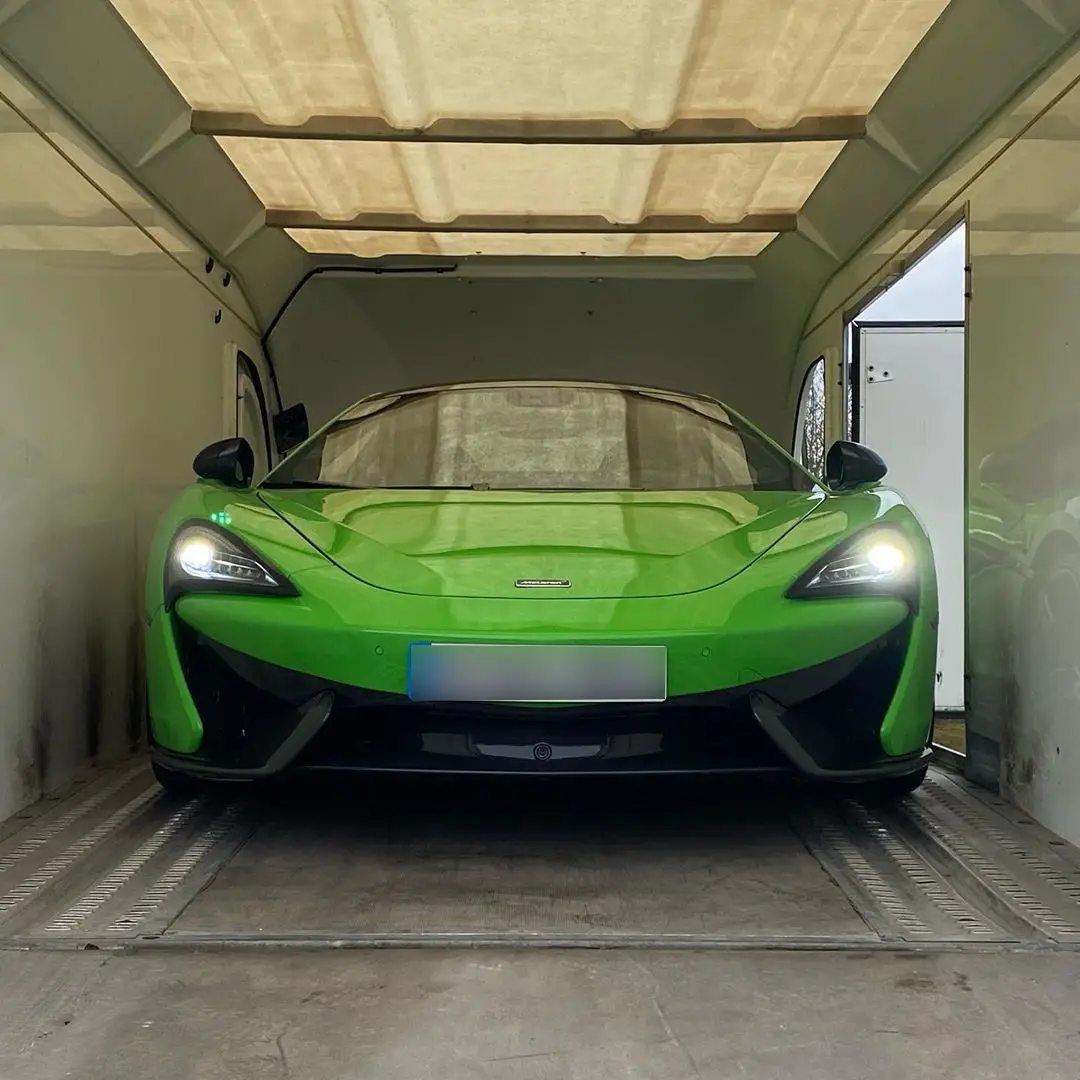
Collection, inspection and loading
Every enclosed shipment begins with a collection from a mainland UK address you nominate — most commonly a private garage, a family residence, a marque-specialist workshop, a concours preparation studio or a secure storage facility. The transporter arrives within a pre-agreed window, typically a two-hour slot. The driver completes a pre-shipment inspection before the vehicle is touched: every panel is photographed, the wheels and interior are recorded, the fuel level and indicated mileage are logged, and any pre-existing imperfections — a stone chip on the bonnet, a kerbed rim, a scuff on a side skirt — are noted and signed off with you or your representative. The condition record is the contract for hand-over at the other end.
Loading is done with extended low-angle ramps that take a shallow approach to the trailer deck — well below the clearance threshold of a low-slung supercar splitter, a pre-war classic running on narrow tyres or a modern hypercar with active aero in the closed position. The vehicle is driven or winched on at walking pace and secured with soft webbing straps over the wheels. There are no chains, no ratchets bearing on the chassis and no contact between the tie-down and any painted, wrapped or PPF-coated surface. For cars with known clearance points — Ford GT splitter, Pagani Huayra side skirts, McLaren P1 front bumper, Aston Martin Valkyrie underbody — the driver carries timber load-out boards and is briefed on the marque-specific procedure ahead of arrival.
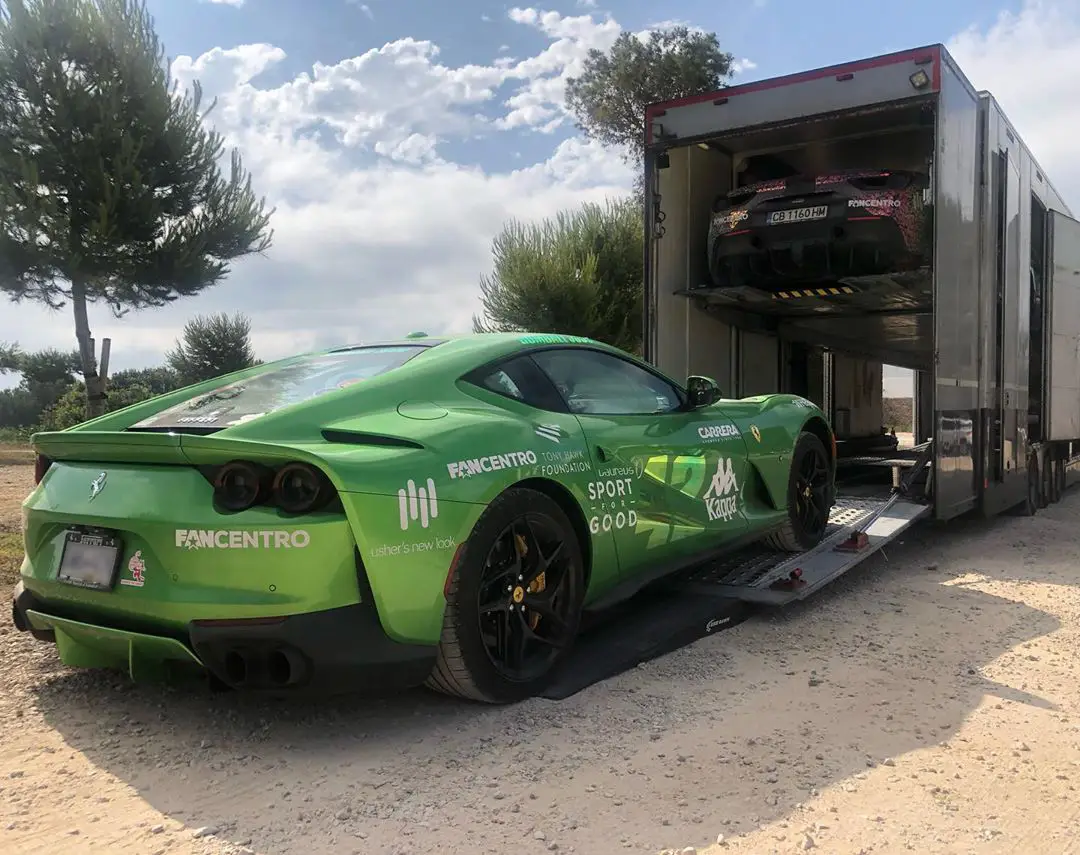
Climate, routing and tracking in transit
Once loaded, the vehicle travels inside a sealed, covered trailer. The deck is climate-managed: temperature and humidity are held within a tolerance suited to ceramic coatings, fresh paint, leather interiors and the cellulose finishes you still find on pre-war coachwork. There is no exposure to UK weather, no road salt over winter routes through northern France, no road debris kicked up by traffic on the A1 or the A8, and no direct sunlight bleaching paint or interior trim across a multi-day journey. Air-ride suspension on the trailer absorbs road shock in a way that conventional spring or torsion systems do not — the difference shows in the condition of low-mounted active aero, ceramic-coated wheels and undertrays on arrival.
Routing is planned in advance. Where the journey requires an overnight halt — common on the run down to the Côte d’Azur, the Costa del Sol or the Italian Riviera — the transporter overnights at a secure fenced-yard site, not a roadside service area. Every transporter carries a GPS unit and the live location is shared with you, your office or a nominated representative for the duration of the move. You receive a tracking link at collection and updates at key waypoints — port arrival, customs clearance, border crossing, onward dispatch and final approach. For clients who prefer it, we also offer a check-in protocol where the driver phones at agreed stages rather than relying solely on the live link. The trailer is unmarked on request, a familiar arrangement for board-level executives, public figures and family offices where the contents of the load are not for general view.
Hand-over takes place at the address of your choice: a private garage at a Monte-Carlo apartment, a Marbella villa, a hotel forecourt on the Croisette, a Saint-Tropez summer residence or a US-bound dealership receiving an enclosed container at an East Coast port. The car is brought to that address; you do not travel to a port to collect it. The driver completes a hand-over inspection mirroring the UK collection record, provides the cleared customs release where international, and emails the entire pack the same day. For regular destinations on the Mediterranean, see our work on the specialist route to Monaco, Saint-Tropez and Marbella. For longer routes, we also operate the enclosed container service to the USA.
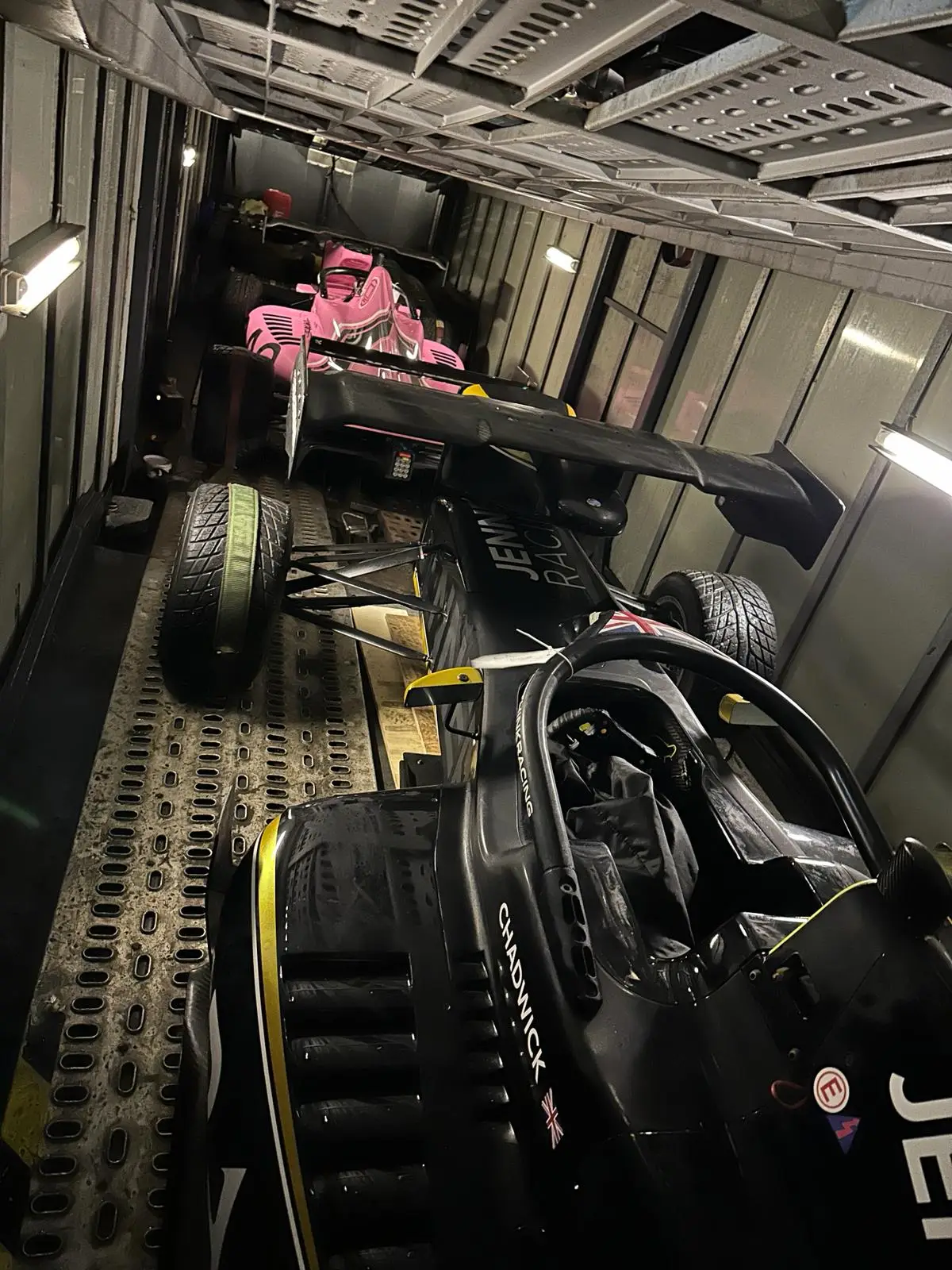
Open versus enclosed — when each makes sense
Open transport has its place. It is the workhorse of the UK car-movement industry — higher capacity per trailer, broader carrier availability, shorter lead times and lower cost. For a five-year-old family hatchback moving between dealer auction and a buyer in Birmingham, or a fleet of new vehicles dispatched from a manufacturer compound to a UK port, open transport is fine. The value of the car, the sensitivity of the paintwork and the routing distance do not justify the premium for a covered trailer.
Enclosed transport is the better choice the moment any of four factors apply. First, value: as a rough rule of thumb, anything north of £40,000 starts to benefit, and anything north of £100,000 should default to enclosed. Second, sensitivity: paint protection film, ceramic coatings, fresh paint, full wraps, pre-show preparation and concours-ready condition all benefit from covered haulage — a single stone-chip from an open route can mean a four-figure respray bill. Third, distance: long routes to the Mediterranean (UK to southern Spain, Portugal, the Italian Riviera) or anywhere requiring sea freight expose an open-deck vehicle to weather, salt and debris across many more hours than a short UK run. Fourth, privacy: where the owner is a public figure, the car is a target for ANPR enthusiasts, or the client simply prefers not to see their vehicle photographed at a service area, enclosed removes the load from public view entirely.
Most of the cars we move sit in at least one of those four categories — most sit in three. If you are weighing the decision for a vehicle in the £40,000 to £200,000 range, use our transport quotes page for the details we need to provide the service options and costs in writing.