
Ask three shipping companies to move the same car to the same port and you may be quoted three different methods at three different prices. RoRo car shipping, a dedicated container, or enclosed transport by road — each is the right answer to a different question. This is the working brief we give clients weighing up international vehicle shipping for the first time: what each method actually involves, what it costs, and which vehicle belongs on which service.
What RoRo car shipping actually is
RoRo — roll-on roll-off, sometimes written ro-ro — is the workhorse of the international car shipping industry. A RoRo vessel is a floating multi-storey car park: your vehicle is driven up a ramp at the port of departure, directly onto the ship, lashed to the deck alongside hundreds of other vehicles, and driven off again at the destination. No crane, no box. The largest designs — the pure car carrier and its truck-carrying cousin — hold several thousand vehicles across a dozen decks, which is why RoRo operators can price the service so keenly.
The economics follow from the format. Because loading is a matter of driving the vehicle up the ramp, port handling is fast and cheap. Because the cargo shares deck space with thousands of other units — cars, vans, heavy machinery, anything on wheels — the cost per vehicle is the lowest of any sea freight method. Shipping lines run scheduled RoRo services from Southampton to the United States, the Middle East, Africa, Australia and the Far East, and the major carriers sail weekly.
The compromises follow from the format too. On a RoRo ship your car is handled at both ends by port drivers, parked centimetres from its neighbours, and travels as one unit of cargo among thousands. It must be able to start, steer and brake under its own power — a non-runner cannot be driven onto the vessel. And personal belongings cannot travel in the vehicle: customs at most destinations require the car to ship empty, and RoRo carriers enforce it.
How much does RoRo shipping cost?
For a standard car from the UK to the US East Coast, RoRo is normally the cheapest way to put a vehicle on the water — port-to-port freight for a saloon-sized unit is typically quoted in the high hundreds of pounds, before UK export formalities, destination customs and delivery. The price is calculated on the space the vehicle occupies — length by width by height — plus the line’s current fuel and security surcharges, which is why a Defender costs more than a 911 on the same sailing. A quotation to ship your car should always itemise the freight, both ports’ handling, customs clearance and insurance, so you can see the whole shipment cost rather than the headline rate.
Container shipping — the dedicated box
Container car shipping answers RoRo’s compromises. The vehicle is loaded inside a dedicated container — a 20-foot box for one car, a 40-foot for two or three — secured to a purpose-built racking system, sealed at the port of departure and opened at the other end. Vehicle containerisation is a specialist job: the loading is done by teams who do nothing else, with soft lashings over the wheels rather than hooks on the chassis.
The sealed box changes what is possible. A non-runner can be winched in. Spares, tools and (within the destination’s customs rules) personal effects can travel with the car. The vehicle is untouched from the moment the container closes, invisible to the outside world, and weather-protected for the whole crossing. For a collector-grade or high-value car crossing an ocean, this is the method we recommend — our UK-to-USA service ships from Southampton or Felixstowe into the main East and West Coast ports, enclosed container as standard for supercars and classics, RoRo where the budget leads. Sea freight in a dedicated container typically runs two to three times the RoRo rate for the same vehicle on the same route.
RoRo is not the budget compromise its critics suggest — and the container is not automatically the premium answer. The method should follow the vehicle.
Enclosed transport — the road option
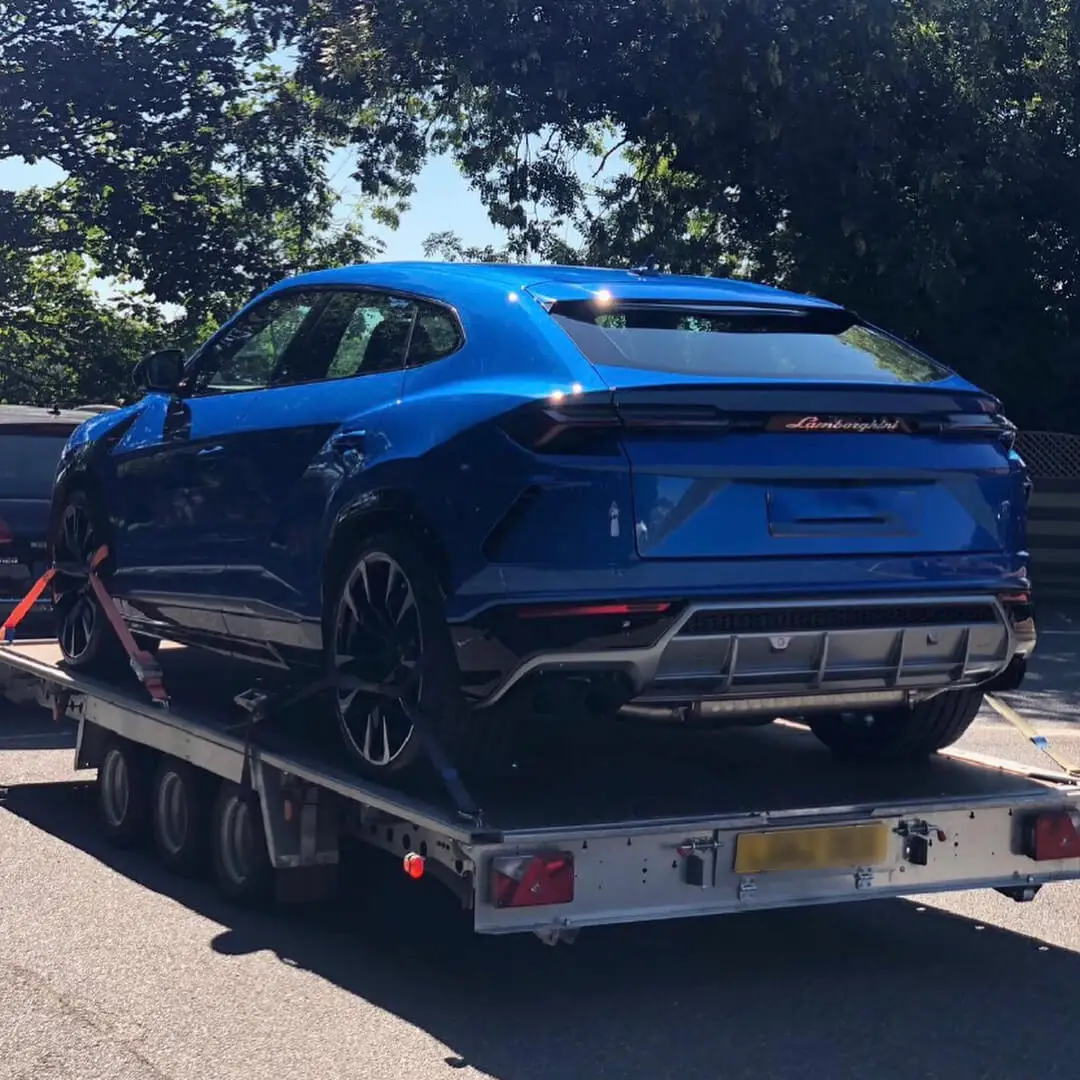
For UK-to-Europe moves, the sea rarely comes into it. The vehicle travels by road in an enclosed transporter — a hard-sided trailer, single or twin-deck, with the car strapped over its wheels and sealed from weather, stone chips and sight. It is door-to-door rather than port-to-port: collection from your address, Channel crossing, delivery to the destination address, one team throughout. Our enclosed car transport service is the default for every luxury, supercar and classic movement we run into Europe, and the transit is measured in days rather than the weeks of a sea crossing.
Which method for which move
- RoRo — a running, standard-sized vehicle crossing an ocean on a sensible budget; empty of belongings; owner comfortable with shared-deck handling. The staple for everyday exports and fleet moves.
- Dedicated container — high-value, classic or non-running vehicles crossing an ocean; anything shipping with spares or effects; any car where you want a sealed box and named handlers. The default for collector cars to the United States.
- Enclosed road transport — any vehicle moving within Europe, and the only method that is genuinely door-to-door. Fastest transit, fewest handovers, no port exposure at all.
- Open transport — the budget road option for standard vehicles within Europe; weather-exposed, best for short hauls and everyday cars rather than collector stock.
What RoRo will not do
It is worth being direct about the restrictions, because they catch first-time shippers out. A vehicle shipping via RoRo must run, steer and brake — the line’s port drivers have to drive it on and off the vessel, and a car that cannot move under its own power will be refused at the dock or surcharged onto a handling platform. Nothing loose can travel in the car: no luggage, no spares, no child seat, and at some destinations not even the jack. Vehicles over standard height or width pay for the extra deck space, and anything genuinely oversized is priced as high-and-heavy cargo. None of these are problems for the method; they are simply the trade the low freight rate buys. When the vehicle warrants more, the dedicated container or the enclosed trailer exists for exactly that reason.
The world’s manufacturers move brand-new vehicles between continents via RoRo every week of the year, and the loss rate is vanishingly small. Equally, a one-of-nine hypercar has no business parked on a shared deck to save what amounts to a rounding error on its insurance premium. Tell your shipper what the car is, what it is worth, whether it runs and what has to travel with it — the right recommendation usually makes itself. For route-level pricing, see the cost to ship a car guide, our US customs brief, and the piece on shipping a classic to Pebble Beach.