
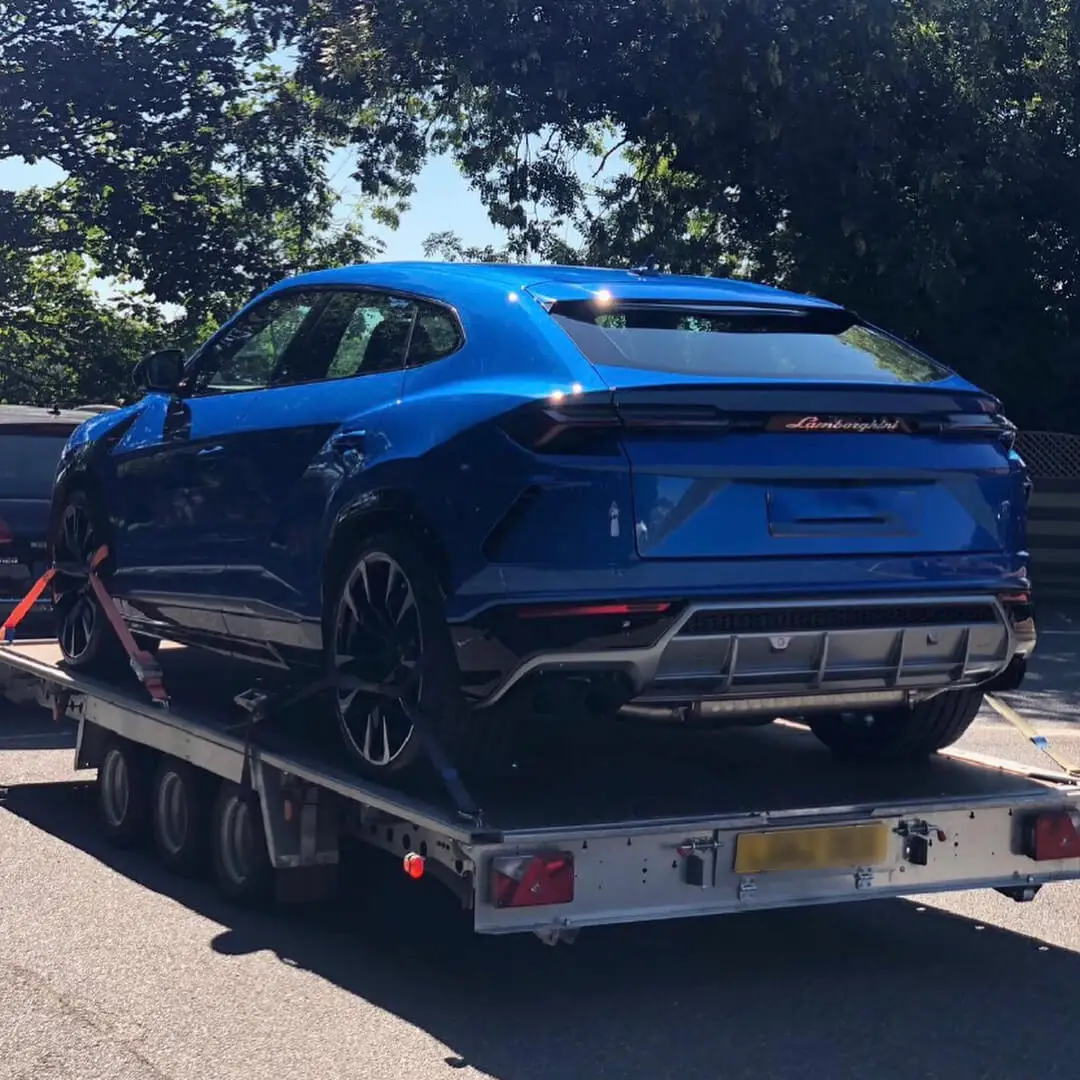
Every summer the same migration: UK-registered GTs, classics and family estates streaming off the Eurotunnel at Calais and turning south. Driving to the South of France is one of Europe’s great road trips — but it is also 700 miles each way, a tank and a half of fuel, a night on the road and a meaningful number on the odometer of a car that may not want the miles. This is the honest working brief: the route, the real costs, the rules for a UK car in France, and the point at which shipping the car south and flying to meet it becomes the better answer.
The classic route: Calais to the Riviera
From Calais the fast way south is beautifully simple. A26 past Reims, down the eastern side of France, around Lyon, then the A7 — the autoroute du Soleil — down the Rhône valley to Provence, where the A8 peels east along the Mediterranean to Nice and the Côte d’Azur. Call it 1,100 to 1,200 km depending on the destination, and around eleven hours at the wheel before stops. Calais to Provence in one day is possible with two drivers; most owners break the journey at Reims, Dijon or Lyon and arrive fresh the following afternoon.
The alternative route down the west — via Rouen, Tours and Bordeaux, then across the Languedoc — adds distance but suits anyone aiming at the south-west or planning vineyard stops in Bordeaux. Both routes are motorway almost door to door: French motorways are excellent, quiet by UK standards, and relentlessly tolled.
What the drive really costs
The road trip maths is worth doing honestly, because the motorway tolls surprise first-timers. Calais to Nice runs to roughly €100–120 in tolls each way for a car, paid at the barrier or via a télépéage tag. Fuel for the round trip is €250–350 depending on the car and your right foot. Add the Channel crossing, an overnight stop each way and meals on the road, and the realistic cost of driving to the South of France and back is £700–£1,000 — before you count depreciation. That is around 1,500 miles on the clock, plus a windscreen’s worth of motorway stone-chip risk on the front of something you care about.
The rules for a UK car in France
Since Brexit the paperwork discipline sits with the owner, and the basics for driving in France are fixed. The car needs a UK identifier — the UK sticker or UK-marked plates. Headlamps must be adjusted for driving on the right. You are required to carry a warning triangle and hi-vis vests for every occupant, reachable without leaving the car. Several French cities — Lyon and Paris among them — run low-emission zones requiring a Crit’Air sticker, ordered in advance from the official French site for a few euros. Insurance-wise, a UK policy covers the EU but often at minimum third-party level unless you tell your insurer; European breakdown cover is worth every penny on a 2,300-km round trip.
The one rule that catches owners of second homes: a UK-registered vehicle can stay in the EU six months in any rolling twelve before it is treated as a permanent import. The detail is in our guide to UK-to-EU car shipping after Brexit — if the car summers on the Riviera every year, count the days.
Making a road trip of it
If the drive is the holiday, the Rhône corridor is generous with reasons to stop. Avignon for the Palais des Papes and a first proper southern evening; the Pont du Gard twenty minutes west; the lavender fields of the Valensole plateau in late June and July; the Verdon Gorge if you are willing to trade the motorway for the best driving road in the south of France. Wine people break at Beaune or Châteauneuf-du-Pape; beach people push on to the coast and the old town at Antibes or the harbour at Saint-Tropez. A road trip built around two overnight stops turns a transit into a holiday — this is the case for driving, and on the right trip, in the right car, nothing beats it.
A GT3 on the Riviera is wonderful. A GT3 doing eleven motorway hours each way is less so.
When shipping the car beats driving it
The calculation changes when the car is the point. The owners we ship for tend to reach the same conclusion by one of three routes. The mileage matters — on a collector-grade car, 1,500 miles is real depreciation money. The time matters — two travel days each way against a two-hour flight to Nice. Or the car simply is not suited to the journey — classics that deserve better than August motorway traffic, hypercars with nose clearance built for a paddock rather than a péage.
Enclosed transport solves all three at once. The car is collected from your UK address in a hard-sided trailer, crosses with the transporter, and is delivered to the villa, the hotel concierge or our partner facility on the coast — door to door, sealed from weather and sight, fully insured throughout. You fly down and the car is waiting. Our UK-to-France transport service runs this route all summer, with dedicated pages for Nice, Cannes and Saint-Tropez. Enclosed Mediterranean routes are priced per job — what drives the figure is set out in the cost guide — and customs, where relevant, is handled in-house end to end.
The hybrid most owners settle on
Drive one way, ship the other. Take the road trip south in June with the stops and the vineyard detours, then fly home and let the transporter bring the car back in September — or the reverse. It keeps the drive as a pleasure rather than a chore, halves the mileage, and turns the worst leg of the journey (the August return, with the whole of France heading north on the same weekend) into someone else’s job. It is, quietly, the most popular arrangement we run on the French routes.
Is it cheaper to fly or drive? For two people with luggage, driving usually wins on raw cost — until you price the car’s miles honestly. Almost always, if the car is a daily and the drive is part of the holiday, drive it. The moment the vehicle is precious, low, valuable or simply not fun on a motorway, shipping stops being a luxury and becomes the rational line on the spreadsheet.